

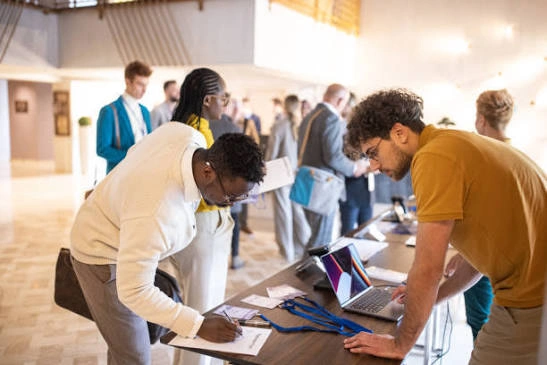
For event data privacy in the UAE, collect only the personal data you need, tell attendees why you collect it, get their consent or rely on another lawful basis, store it securely, keep it no longer than needed and delete it after the event. Onshore events fall under the federal Personal Data Protection Law (Federal Decree-Law No. 45 of 2021). Events run by companies in DIFC and ADGM follow those free zones’ own data protection laws. This is general information, not legal advice, so confirm your approach with a UAE legal adviser.
Event organisers handle a lot of personal data in a short time: registration forms, badge scans, photos, payment details and app activity. A mistake can cost trust and, depending on the rules that apply, money. This guide explains which UAE rules matter, what data to collect and store at an event, how long to keep it and how to choose safe vendors.
Event data privacy UAE: what to collect and what to avoid
The safest rule is data minimisation: collect what you need to run the event and follow up, and nothing more. Use this table as a starting point.
Data | Collect? | Why, and the risk | Good practice |
|---|---|---|---|
Name, company, job title, work email | Yes | Needed for registration, badges and follow-up | Collect at registration with a clear notice |
Phone number | Only if needed | Useful for urgent updates and WhatsApp reminders | Make it optional unless required |
Marketing consent | Yes, separately | Needed before sending marketing messages | Use a separate, unticked box and record the date |
ID or passport number | Only when the venue or law requires it | High-risk data that is costly if leaked | Collect only if required, restrict access, delete early |
Photos and video of attendees | Tell people first | Images can identify people, and some uses are sensitive | Put notices at entrances and on forms, and offer an opt-out |
Face recognition or biometric check-in | Avoid unless you have strong reasons | Treated as high-risk data, and rules are stricter | Take legal advice before using it, and offer an alternative |
Dietary and accessibility needs | Only if you need them | May reveal health information | Ask for the minimum, use it for the event only, delete after |
Payment card details | Never store them yourself | Card data carries heavy security duties | Use a payment provider, and don’t keep card numbers |
Location or Bluetooth tracking in the venue | Only with clear notice | Tracks movement and can feel intrusive | Explain the purpose, anonymise where possible |
Which UAE data protection laws apply to events?
Three regimes matter most, depending on where the organiser is established.
- Federal PDPL (Federal Decree-Law No. 45 of 2021): the UAE’s main personal data law. It covers onshore businesses and free zones other than DIFC and ADGM, and it reaches organisations outside the UAE that handle data of people in the UAE. It has applied since January 2022.
- DIFC Data Protection Law (Law No. 5 of 2020): applies to organisations established in the Dubai International Financial Centre.
- ADGM Data Protection Regulations 2021: apply to organisations established in Abu Dhabi Global Market.
Some sectors have extra rules. Health data and banking or credit data are covered by their own federal laws, so an event that collects medical information or takes payments should check those too.
Status to check: the legal sources I reviewed, dated up to August 2026, say the PDPL is in force but that its executive regulations, which are meant to set out detailed procedures, had not been issued. They also say a full penalty schedule had not been confirmed. This area changes, so check the current position with a UAE legal adviser before you rely on any detail below.
What the principles mean at an event
UAE and free zone laws share a set of principles. Here is how each one works in practice.
- Lawful and transparent: tell attendees what you collect and why, at the point of registration.
- Purpose limitation: use the data for the event and the reasons you stated. Don’t add attendees to an unrelated mailing list.
- Minimisation: don’t ask for a passport number or date of birth if you only need a name and email.
- Accuracy: let attendees correct their details, and update records when they do.
- Security: protect data with access controls, encryption and trained staff.
- Storage limitation: delete or anonymise data once you no longer need it.
How to get valid consent from event attendees
Consent is the main basis for collecting attendee data under the federal law, with some exceptions such as performing a contract. Good consent is clear, specific and easy to withdraw.
- Explain before you ask. Add a short privacy notice to the registration form that says who you are, what you collect, why, who receives it and how long you keep it.
- Separate the choices. Registration, sharing details with sponsors and marketing emails are three different purposes. Use separate, unticked boxes.
- Don’t make marketing a condition of entry. People should be able to attend without agreeing to promotions.
- Record it. Keep the date, the wording and the choice for each attendee.
- Make withdrawal easy. Include an unsubscribe link in every message and a contact address for privacy requests.
- Repeat the notice on site. Put a sign at registration and at badge scanning stations, so exhibitors who scan badges are also covered.
Where and how to store attendee data safely
- Choose a secure platform. Use a registration system with access controls, encryption and an audit trail.
- Limit who can see data. Give staff and exhibitors access only to what they need, and remove access after the event.
- Protect on-site devices. Use passcodes on tablets and laptops, and lock or wipe them at the end of each day. Keep printed attendee lists to a minimum and shred them afterwards.
- Check where the data is stored. The federal law restricts transfers of personal data outside the UAE to countries without adequate protection unless safeguards or exceptions apply, and health data generally has to stay in the UAE. Ask your platform provider where its servers are.
- Never store card numbers yourself. Use a payment provider that handles card data.
- Back up and plan for incidents. Know who to call, and how, if data is lost or exposed.
How long can you keep event data?
The UAE sources I reviewed set no fixed retention period for event data. The rule is to keep personal data no longer than you need it for the purpose you gave, then delete or anonymise it. In practice:
- Decide a retention period for each type of data before the event, and write it down.
- Delete data you collected but never used, such as dietary details, soon after the event.
- Keep follow-up contact details only for as long as attendees agreed to be contacted.
- Delete or anonymise registration and badge-scan data once the follow-up period ends, unless a law requires you to keep it.
- Tell attendees the period in your privacy notice.
Choosing safe event technology vendors
Registration, badge printing, lead capture and event apps all process personal data on your behalf. You stay responsible for what they do with it, so ask each vendor:
- Where is the data stored, and who can access it?
- Is the data encrypted when stored and when sent?
- Do you use sub-processors, and where are they?
- What happens to the data after the event, and can you delete it on request?
- How will you tell us about a security incident, and how fast?
- Will you sign a data processing agreement?
- How do you handle exhibitor badge scans and lead data?
Photos, video, CCTV and facial recognition at events
Images of identifiable people are personal data. Event photography and CCTV are common, but you should tell attendees before they arrive, add signs at entrances and registration, and offer a way to opt out of being photographed for promotional use. Face recognition and other biometric check-in carry higher risk and stricter rules, so take legal advice first and always offer an alternative way to check in.
What attendees can ask you to do
The federal law gives people rights over their data. These include access to it, correction, deletion in some cases, restriction of processing, objection to processing and objection to direct marketing. Set up a simple way to receive requests, such as a privacy email address, and decide who handles them. Detailed deadlines and procedures depend on regulations that, according to the sources I reviewed, are still pending, so respond promptly and keep records.
What to do if event data is lost or exposed
Act fast. Contain the problem, find out what data and which attendees are affected, and get legal advice on who must be told. The federal law requires reporting a breach to the UAE Data Office, with the timing to be set in regulations. DIFC requires notice without undue delay, and ADGM sets a 72-hour deadline. Tell affected attendees clearly if the risk to them is high, and write down what happened and what you changed.
Event data privacy checklist
Before the event
- Decide which laws apply, based on where your company is established and where the data is processed.
- List the data you will collect, and remove anything you don’t need.
- Write a clear privacy notice and add it to the registration form.
- Add separate consent boxes for marketing and for sharing with sponsors.
- Sign a data processing agreement with each vendor.
- Set a retention period for each data type.
- Brief staff and exhibitors on how to handle attendee data.
During the event
- Put privacy and photography notices at registration and entrances.
- Offer a non-biometric option for check-in.
- Lock devices and limit who can export data.
- Keep a way for attendees to ask questions or opt out.
After the event
- Remove access for temporary staff and exhibitors.
- Delete data you no longer need.
- Send follow-up messages only to attendees who agreed.
- Record what you collected, why and when you deleted it.
Frequently asked Questions
Usually yes. Consent is the main legal basis under the federal law, with exceptions such as performing a contract. Explain what you collect and why, use separate boxes for marketing, record each choice and let people withdraw easily. Confirm your wording with a legal adviser.
Collect only what you need: name, company, job title and work email, plus a phone number if you need urgent contact. Ask for dietary, accessibility or ID details only when required, and avoid storing card numbers. Fewer fields mean less risk and faster registration.
The UAE sources I reviewed set no fixed number for events. The rule is to keep personal data no longer than needed for the purpose you stated, then delete or anonymise it. Set a retention period, write it down, tell attendees and delete data once it ends.
Sometimes. The federal law restricts transfers to countries without adequate protection unless safeguards or exceptions apply, and health data generally must stay in the UAE. Check where your registration platform stores data, and get legal advice before using servers abroad.